You can visit the National Weather Service at https://www.weather.gov/fgz/

You can visit the National Weather Service at https://www.weather.gov/fgz/
Personal Safety in Winter Storms
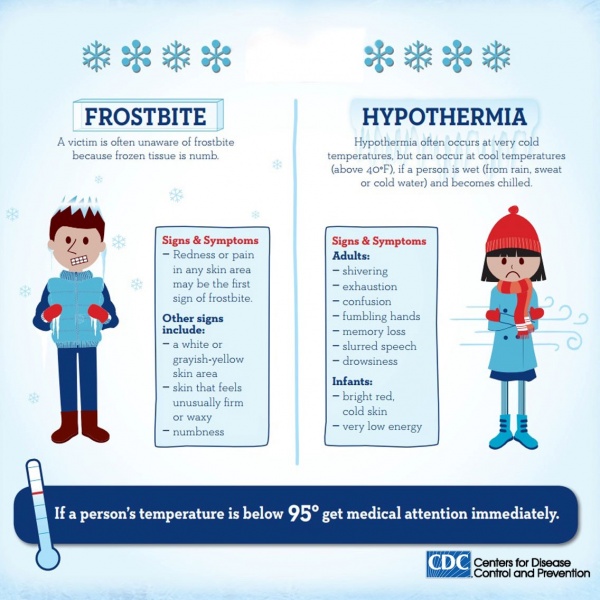
The key to having fun and staying safe in winter weather is planning ahead. The main danger of being outside is obvious, it’s the cold. Hypothermia and frostbite are serious health problems that can result from too much cold.
o Hypothermia– is a dangerous drop in body temperature, usually caused by extended exposure to cold temperatures. Signs of Hypothermia include uncontrollable shivering, memory loss, disorientation, incoherence, slurred speech, drowsiness, and apparent exhaustion
What to do: Get the victim to a warm location. Remove wet clothing. Warm the center of the body first by wrapping the person in blankets or putting on dry clothing. Give warm, non-alcoholic beverages if the victim is conscious. Seek medical help immediately.
Wearing layers of warm clothes is a good way to protect yourself from frostbite and hypothermia. The outside layer should be windproof and waterproof while the inside layers should keep you warm.
Additional storm safety to consider includes:
o Walk carefully on snowy, icy, walkways.
o Avoid overexertion when shoveling snow. Use caution, take breaks, push the snow instead of lifting it when possible, and lift lighter loads. Shoveling snow can be a health risk, so remember to take it easy.
o Keep dry. Change wet clothing frequently to prevent a loss of body heat. Wet clothing loses all its insulating value and transmits heat rapidly.
o Drive only if it is necessary. If you must drive: travel in the day; don’t travel alone; keep others informed of your schedule; stay on main roads and avoid back road shortcuts.
o Let someone know your destination, your route, and when you expect to arrive. If your car gets stuck along the way, help can be sent along your predetermined route.
o Travel in pairs, always tell someone where you are going and when you are coming home.
o Avoid carbon monoxide poisoning. Only use generators and grills outdoors and away from windows. Never heat your home with a gas stovetop or oven.
o Check on neighbors. Older adults and young children are more at risk in extreme cold.
In addition to previously listed closures, I-17 northbound at SR 179 (the Sedona exit) is now closed due to weather conditions.